Hardware Support
As a hardware support technician, it is essential to have a good understanding of operating systems (OS) and how they interact with hardware. In addition to knowledge of different operating systems, it is also important to have a good understanding of requirements for Operating System installations, actual installation steps of an Operating System, Windows Operating system features, Hard disk partitioning etc. Also, it is always beneficial to have some basic knowledge of networking concepts.
In simple words Hardware Support Technician is the one who installs, Troubleshoot, repairs, maintains various types of Hardware IT assets. These IT Hardware assets can be Desktops, Laptops, Printers, Scanners, Power supply, RAM, Cooling Systems, and Monitors
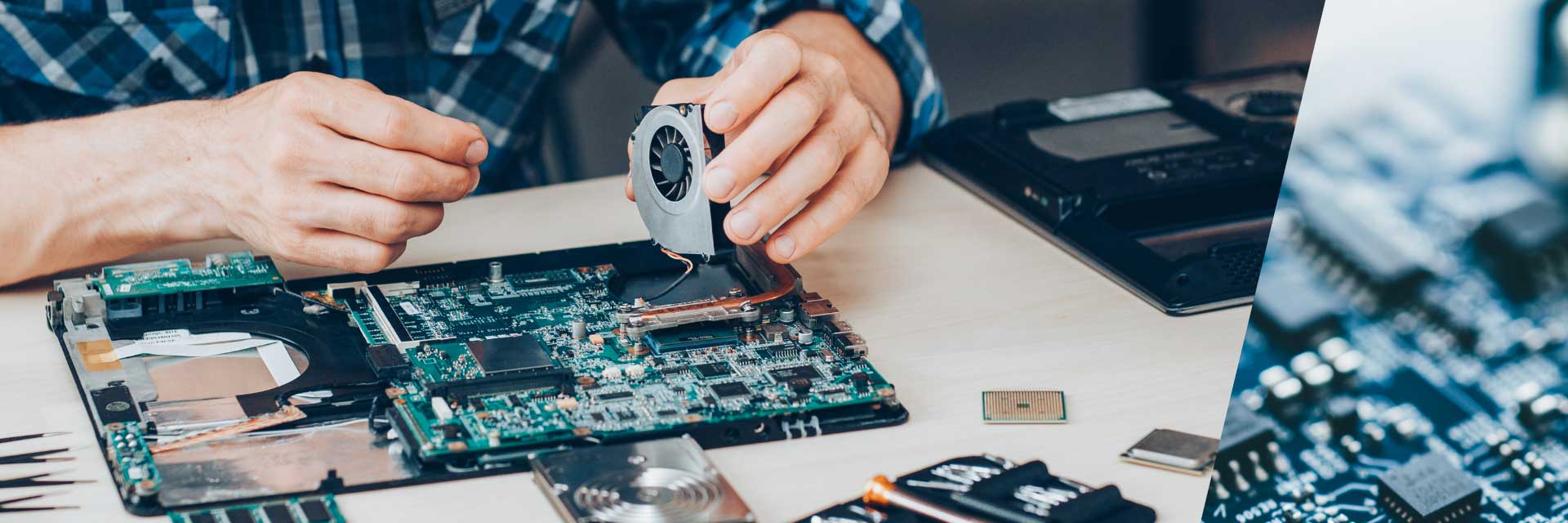
What does an IT Hardware Support Technician do?
Using Basic Troubleshooting skills he/she can identify diagnose and resolve the Basic IT hardware related problems. He/She can do primary level of fault finding and repairing for IT hardware. He/She can also perform tasks like Assembling PCs, Laptops, Installing RAMs, replacing Power supply are few such more services an IT hardware support technician can offer.
Who Should Join
- Students in Technical Fields studying computer hardware, electronics, or IT-related fields who need practical knowledge in assembling PCs and troubleshooting common issues.
- IT Support Technicians aiming to build or enhance their skills in troubleshooting, assembling, and maintaining computer hardware.
- Aspiring PC Technicians interested in starting a career in PC building, maintenance, and repair, learning how to work with system unit components and peripherals like printers.
- IT Professionals working in IT departments who need to manage hardware, printers, and other peripherals in corporate environments.
- Office Technicians / Professionals in office environments responsible for maintaining and troubleshooting hardware issues to ensure smooth operations.
What you'll learn ?
A hardware support technician can work with companies/enterprises having an IT infrastructure including desktops and laptops or the companies who are providing hardware sales and support.
He/She can do a job or can work as an IT Hardware Support Consultant. A fresher can draw up to Rs. 100,000/- p.a.
Hierarchy
In any typical industry enterprise having even a basic IT Infrastructure including desktops and laptops, he/she would work with a team of such more hardware and network support technicians who would guide them. He/She can further pursue to become a System Engineer or a System administrator as per his/her liking and abilities.
Tools
Typically an IT Hardware Support Technician uses tools like IT Helpdesk, hardware monitors, and multi-meters for providing hardware support. Knowledge of few other tools like memtest86, CPUID (open source system hardware monitoring tool), and few similar open source tools can be beneficial for an IT Hardware Support Technician.
Syllabus
- Introduction to Operating Systems
- Types of Operating Systems
- Overview of Microsoft Operating System
- Introduction to Linux operating system
- Client vs Server Operating System
- Installing software for Writing CD and creating ISO images
- Windows 10 Operating System
- Windows 10 installation
- Types of Partitions
- Basics of Computer Networking
- Different types of Internet Connectivity
- Difference between Static and Dynamic IP Address
- Configuring Wi-Fi network
- Identifying System Unit Components
- Input Hardware Devices
- Output Hardware Devices
- Basic Hardware Connections
- Modern Types of Connectors – USB, OTG, NFC
- External Hardware and Peripherals Connections
- Motherboard Overview
- Motherboard Components
- Understanding CPU characteristics
- CPU Cooling Techniques
- Multimedia Devices
- Identifying Storage Devices
- SATA Drives
- SSDs
- SCSI Drives
- Overview RAID storage
- Understanding laser printers
- Understanding Inkjet Printers
- Understanding Thermal Printers
- Understanding Impact Printers
- Setting up and Installing a Printer
- Wireless printing
- Printer toner refilling
- Installing Various Types of Hardware Components
- Readers and scanners
- Projector
- CCTV and Surveillance system
- Computer Firmwares
- Assembling a PC
- UPS and Inverters
- Basic Electronics overview
* Laptop Inbuilt Hardware components - Speakers, Motherboards & CPU * Laptop Internal Hardware-Memory & Optical Drives * Laptop RAM and SSDs * Laptop Components- Express Cards * Laptop Components- Expansion Cards
- Servicing laptop hardware * Tablets vs Laptops
- Troubleshooting hardware devices
- Troubleshooting laptop components
- Troubleshooting Hard Drives
- Troubleshooting Printers
- Desktop chip level repairing basics
- Mobile repairing – Basics of mobile repairing
- Laptop chip level repairing basics
- Computer Safety Procedures
- Managing Computing Environments
- Managing Safety Hazards
- PC Hardware-Electrostatic Discharge Tools
- Computer and Laptop Cleaning Tools
- PC Hardware Diagnostic Tools
- Securing Computers
- Computer Hardware Recycling
- Communication and Professionalism
Who Should Join 2
- Students in Technical Fields studying computer hardware, electronics, or IT-related fields who need practical knowledge in assembling PCs and troubleshooting common issues.
- IT Support Technicians aiming to build or enhance their skills in troubleshooting, assembling, and maintaining computer hardware.
- Aspiring PC Technicians interested in starting a career in PC building, maintenance, and repair, learning how to work with system unit components and peripherals like printers.
- IT Professionals working in IT departments who need to manage hardware, printers, and other peripherals in corporate environments.
- Office Technicians / Professionals in office environments responsible for maintaining and troubleshooting hardware issues to ensure smooth operations.
Work-Centric Approach
The academic approach of the course focuses on ‘work-centric’ education. With this hands-on approach, derive knowledge from and while working to make it more wholesome, delightful and useful. The ultimate objective is to empower learners to also engage in socially useful and productive work. It aims at bringing learners closer to their rewarding careers as well as to the development of the community.
- Step 1: Learners are given an overview of the course and its connection to life and work
- Step 2: Learners are exposed to the specific tool(s) used in the course through the various real-life applications of the tool(s).
- Step 3: Learners are acquainted with the careers and the hierarchy of roles they can perform at workplaces after attaining increasing levels of mastery over the tool(s).
- Step 4: Learners are acquainted with the architecture of the tool or tool map so as to appreciate various parts of the tool, their functions, utility and inter-relations.
- Step 5: Learners are exposed to simple application development methodology by using the tool at the beginner’s level.
- Step 6: Learners perform the differential skills related to the use of the tool to improve the given ready-made industry-standard outputs.
- Step 7: Learners are engaged in appreciation of real-life case studies developed by the experts.
- Step 8: Learners are encouraged to proceed from appreciation to imitation of the experts.
- Step 9: After the imitation experience, they are required to improve the expert’s outputs so that they proceed from mere imitation to emulation.
- Step 10: Emulation is taken a level further from working with differential skills towards the visualization and creation of a complete output according to the requirements provided. (Long Assignments)
- Step 11: Understanding the requirements, communicating one’s own thoughts and presenting are important skills required in facing an interview for securing a work order/job. For instilling these skills, learners are presented with various subject-specific technical as well as HR-oriented questions and encouraged to answer them.
- Step 12: Finally, they develop the integral skills involving optimal methods and best practices to produce useful outputs right from scratch, publish them in their ePortfolio and thereby proceed from emulation to self-expression, from self-expression to self-confidence and from self-confidence to self-reliance and self-esteem!